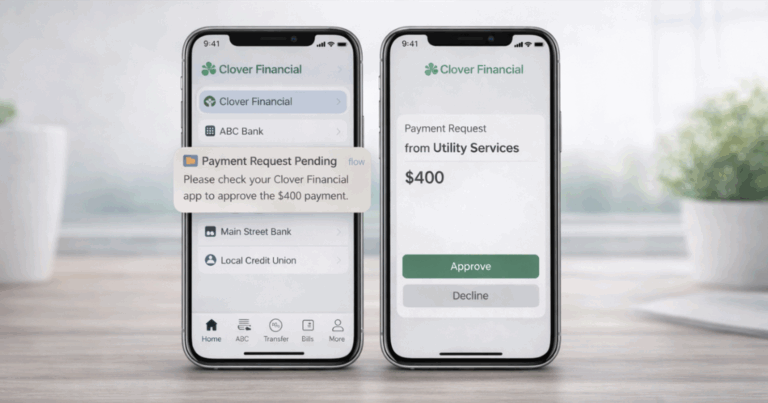
Faster payments are no longer a feature to consider for the future. They are a competitive necessity. Customers expect funds to move in real time, whether they are splitting a bill, paying a vendor, or receiving a claim payout. Businesses, too, are making significant investments in payment capabilities and are ready to change providers if their expectations aren’t met.
The opportunity for banks and credit unions is clear. Faster payments create engagement, strengthen loyalty, and keep deposits in-house. Yet the challenge goes beyond speed. Without unifying different payment rails, institutions risk inefficiency, rising costs, and lost visibility into money movement.
This paper explores why financial institutions must lead the next wave of payments modernization. We highlight how a payments hub approach, with Zelle® as a cornerstone, positions institutions to deliver the speed and convenience customers expect while maintaining control and profitability.
$1T+ sent via Zelle® in 2024
87% of corporates expect to be live with real-time payments by the end of 2025
$3T in deposits shifted to fintechs over the last five years
Quick Links
Customer Expectations Have Changed
Payments are no longer invisible back-end plumbing. They are part of how customers experience and evaluate their financial institution. Almost 80%1 of consumers say instant payments are the most important feature their bank could offer. Among businesses, the pressure is even greater: 47%2 have already switched financial institutions to access faster payments, and another 43%2 say they are willing to.
Younger generations are driving this change. Millennials and Gen Z rely heavily on digital payments, with platforms like Zelle® and mobile wallets becoming their preferred method. As these groups take on more financial decision-making—whether for their households or their small businesses—the need for instant, digital-first payments will only continue to grow.
Zelle®: A Proven Rail for Growth and Engagement
Zelle® has become one of the most important payment rails in the U.S. In 2024, the network processed more than $1 trillion, a 27% increase from the year before. It now counts 151 million enrolled users and more than 500 million small business transactions annually.3
For financial institutions, Zelle® does more than move money. It drives measurable engagement and profitability:
3.2X
New Zelle® users conduct an average of 3.2 more debit card transactions per month.4
$25+
They generate about $25 more in annual revenue compared with non-users.4
$10
Institutions offering Zelle® report operational savings of about $10 per user annually.5
One in three
Zelle® users would switch banks if their FI stopped offering it.3
Just as important, Zelle® provides customers and businesses a way to make payments without sharing sensitive account details. All they need is a U.S. mobile number or email address, which keeps confidential banking information private while simplifying the payment experience.
With the discontinuation of the standalone Zelle® app in April 2025, the need for banks and credit unions to make Zelle® available to their customers directly in their digital app became even greater. For institutions that do not offer it, the risk of attrition is a very real threat.
The Business Case for Faster Payments
Peer-to-peer (P2P) payments are no longer niche. U.S. P2P transaction volume is projected to reach $1.7 trillion in 2027, which implies an annual growth rate from 2024 to 2028 forecasted at 17.3%. In fact, 81% of U.S. consumers used a P2P app at least once in 2023. This surge highlights how much everyday financial activity is shifting into fintech and wallet-based channels, and why it’s critical for banks and credit unions to keep those transactions within their ecosystem.
When activity moves outside, the financial impact is significant. Debit interchange revenue declines as volume flows to third-party wallets. Based on Federal Reserve data, regulated debit interchange averages about 0.6%7 per transaction, which equates to roughly $6 million in lost interchange income for every $1 billion displaced.
Consumer loyalty is also fragile. 76%8 of consumers say they would switch banks if they found one that better meets their digital needs. Institutions that cannot match fintech convenience and speed risk losing both engagement and deposits.
This is not just about matching fintech convenience. It is about protecting deposits, maintaining visibility into customer activity, and preserving opportunities to cross-sell and deepen relationships.
From Fragmentation to Orchestration
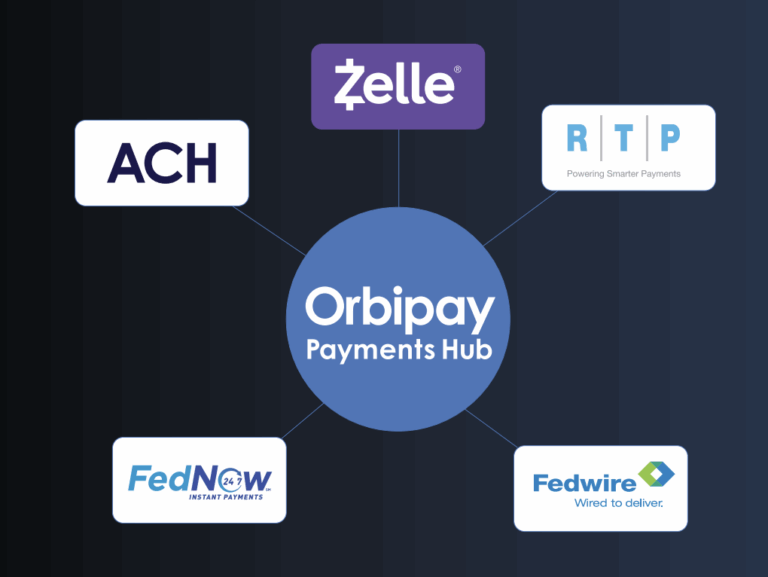
Most financial institutions already support multiple payment rails— ACH, wires, Zelle®, the RTP® network, and the FedNow® Service. The challenge is that many of these systems operate in silos. Each rail brings its own fraud checks, reporting tools, and vendor relationships, creating unnecessary complexity and hidden costs.
A payments hub shifts the model from fragmented operations to an orchestration strategy. By unifying every rail under one platform, institutions gain efficiency, improve visibility, and make faster payments sustainable at scale. Key benefits include:
- Core-agnostic deployment so institutions can add faster payments without core upgrades.
- Multi-layered fraud defense applied consistently across rails
- Centralized settlement and reporting for greater visibility.
- Reduced vendor complexity and lower operating costs.
- Future-proof design that allows new use cases and rails to be added with minimal disruption.
The result is more than speed—it is smarter payments management that drives both customer loyalty and long-term growth.
Alacriti’s Orbipay Payments Hub delivers on this vision. It integrates Zelle® alongside the RTP network, FedNow Service, ACH, and wires in a single, cloud-native platform. By embedding orchestration directly into the institution’s digital banking channels, Orbipay Payments Hub enables banks and credit unions to deliver faster payments with the convenience customers expect — while keeping deposits, data, and engagement inside their own ecosystem.
ALACRITI DIFFERENTIATORS:
Multi-rail orchestration in one platform.
Flexible deployment regardless of core.
Cloud-native, ISO 20022 compliant.
Centralized reporting and analytics.
The Path Forward
Zelle® is more than a person-to-person solution. It has become a cornerstone of a modern payments strategy. When embedded within a hub, Zelle® keeps money movement inside the institution’s ecosystem, while delivering the speed and convenience consumers demand.
Over the next two years, P2P is expected to move from a mostly consumer-to-consumer convenience to a default way money moves across everyday life—extending into small business receipts, refunds, reimbursements, club dues, rent, and one-off invoices. More credit unions and banks will keep P2P in their digital banking app. The experience will look simpler to users—tap, confirm, done—while the back end gets smarter, blending directory-based addressing with invoice-aware features like Request for Pay (RfP) and richer receipts that feed accounting and personal finance tools. Small businesses will see faster cash flow and simpler reconciliation as real-time settlement meets better payment metadata.
The next two years will be pivotal for faster payments. Institutions that unify all rails within a hub will be positioned to grow deposits, strengthen loyalty, and improve profitability. Just as important, a hub provides the agility to scale quickly as new technologies and use cases emerge, ensuring that banks and credit unions stay ahead of customer expectations while protecting their position.
Alacriti’s centralized payment platform, Orbipay Payments Hub, provides innovation opportunities and the ability to make smart routing decisions at the financial institution to meet their individual needs. Financial institutions can take full ownership of their payments and control their evolution with ACH, Wire, TCH’s RTP® network, Visa Direct, and the FedNow® Service, all on one cloud-based platform.
Zelle® and the Zelle® related marks are wholly owned by Early Warning Services, LLC and are used herein under license.
Sources:
- EPAM Continuum’s 2024 Consumer Banking Report
- Datos Insight Instant Payments & Zelle ACH & Wires Modernization Sept 2025
- Zelle® Press Release
- Curinos Report: Zelle® Usage Drives Customer Engagement Q1 2023
- Value of Zelle®, November 2021. Early Warning Customer Data, Curinos Benchmark Data, Curinos Analyses; metrics calculated using November 2020 data (with some metrics looking back up to 90 days). Cost savings exclusive of the costs incurred by the financial institution to offer Zelle®; Overdraft costs excluded.
- Oberlo US Mobile Payment Market Statistics
- Federal Reserve System
- What Customers Want From Banks: Online Banking Trends and Consumer Priorities