Providing a seamless and efficient loan payment experience is crucial for financial institutions aiming to enhance customer satisfaction and streamline operations.
Stuart Bain, Senior Vice President at Alacriti, and Jeff Bucher, Senior Product Manager at Alkami, hosted a webinar, Streamlining Loan Payments for Operational Efficiency and Cost Savings, to discuss how integrating loan payments into digital banking platforms can drive significant benefits for both financial institutions and their accountholders. They also explored strategies to optimize loan payment processes for improved efficiency and cost savings.
Quick Links
About Alacriti and Alkami
Alacriti and Alkami, two leading names in the fintech industry, have come together to revolutionize how financial institutions manage payments. Alacriti, with over 20 years of experience in payment modernization, specializes in creating innovative payment solutions that cater to the diverse needs of banks and credit unions. Their loan payments solution, Orbipay EBPP, allows financial institutions to accept loan payments from both consumer and business customers across various payment channels and methods.
Alkami, a leader in digital banking solutions, provides a robust platform that empowers financial institutions to deliver seamless digital experiences to their customers. With a focus on money movement and payment strategies, Alkami’s solutions are designed to enhance user engagement and operational efficiency. Together, Alacriti and Alkami are setting new standards in the industry, helping financial institutions streamline their payment processes and improve customer satisfaction.
Overview of Loan Payments
Loan payments, or repayments, are a critical component of loan servicing, ensuring that financial institutions can effectively manage the funds they lend out. Bain provided an insightful overview of the different types of loans and the unique payment challenges they present. “Loan payments, or repayments, are sort of a vital part of the ongoing process of servicing loans. It’s no good lending money if you can’t accept payments on those loans subsequently,” he explained.
Direct Loans:
Made to customers/members who also have a banking relationship with the financial institution.
Indirect Loans:
Made to individuals whose only relationship with the financial institutions may be that loan.
The complexity of loan payments arises from the diverse nature of loan products and the varying needs of borrowers. Direct loans are those made to individuals who have a full banking relationship with the institution, such as a mortgage, auto loan, or credit card. These borrowers are more likely to use online banking to manage their loan payments along with other financial products.
On the other hand, indirect loans are typically made to individuals whose only relationship with the financial institution is the loan itself, often facilitated through a third party, like a car dealership. These borrowers might not see the need to sign up for online banking if their only product with the institution is an auto loan—it’s more likely they just want to pay their bill.
Given the diversity in loan types and borrower preferences, offering a range of payment options that cater to the unique needs of different customer segments is key. “When we talk about those loan payment options available to those customers or members, it’s going to be focused on what they want to do,” Bain said. This involves considering various payment channels, such as online, over the phone, or in-person, as well as payment methods, including bank accounts and debit cards.
Another critical factor is the need to make loan payments as selfservice and frictionless as possible. “The goal is to make those loan payments self-service and frictionless, and that then reduces the overall costs associated with accepting those payments,” Bain explained. By enabling borrowers to manage their payments independently, financial institutions can significantly lower the operational costs associated with manual payment processing and customer service interactions.
However, external changes, such as regulatory shifts, can impact the financial institution’s loan payment strategy. For instance, the Consumer Financial Protection Bureau (CFPB) recently banned excessive credit card late fees, which has the potential to reduce revenue streams that some institutions have relied on to offset inefficient loan payment practices, particularly in credit card servicing.
The Benefits of a Broad Loan Payment Strategy
A broad and modern loan payment strategy can significantly enhance operational efficiency, reduce costs, and improve customer satisfaction.
Cost Savings and Operational Efficiency
One of the primary benefits of adopting a modern loan payment solution is the potential for substantial cost savings. “If you can accept your payments more efficiently while reducing overhead costs, say, for example, alleviating support or call center time, you actually reduce the overall cost,” Bain shared. This reduction is not limited to the cost of processing payments but also includes savings in staff time, call handling, and other associated overheads.
By implementing self-service payment options, such as automated phone payments via an Interactive Voice Response (IVR) system, financial institutions can further optimize their operations. Bain explained that these self-service options “free up FTE in your call center to allow them to be directed to other priorities or things that benefit you more than just literally answering the phone to take a payment.” This not only reduces the workload on customer service representatives but also allows them to focus on more complex tasks—enhancing overall operational efficiency.
Increased Customer Adoption and Satisfaction
A broad loan payment strategy that offers multiple payment channels and methods can lead to greater customer adoption and satisfaction. “The more options you offer, the more likely it is somebody will pay that way,” said Bain. By offering various payment options—such as online payments, automated payments, and pay-by-text—financial institutions can cater to different customer preferences, making it easier for them to manage their loan payments.
A streamlined and user-friendly payment solution can also lead to higher customer satisfaction, as it reduces the likelihood of paymentrelated issues. Bain advised:
A well-designed payment system not only simplifies the payment process but also minimizes the need for customers to contact the call center, further contributing to cost savings
Supplemental Income and Strategic Growth
In addition to operational efficiencies and cost savings, a modern loan payment strategy can generate supplemental income for financial institutions. For example, financial institutions can capture convenience fees on debit card payments, which can offset the costs of processing these transactions. This allows financial institutions to benefit from the immediacy and convenience of debit card payments without incurring additional processing costs.
A successful loan payment strategy can drive strategic growth for financial institutions. By reducing operational costs and enhancing customer satisfaction, institutions can reinvest these savings into expanding their services and improving their offerings. As an example, Bain shared:
while simultaneously increasing their online bill pay volume by 48% year over year. These are significant results for both transaction volume and customer engagement.
Payment Options: A Deep Dive
Providing a variety of payment options is crucial for financial institutions and is an opportunity to differentiate from competitors and provide a more streamlined self-service experience.
Guest Web and Hosted IVR: Simple and Secure Payment Channels
Offering multiple payment channels caters to different user preferences. Bain explained the value of traditional channels like Guest Web and Hosted IVR. These channels are particularly useful for indirect loan holders who want to make electronic payments without the need to sign up for online banking. “This gives them the option to go somewhere and easily make a payment without enrollment, both via the web or via a fully recorded IVR.”
These options are designed to accommodate users who may not have a direct relationship with the financial institution or prefer not to create additional login credentials. For instance, a customer might want a third party, such as a family member, to make a payment on their behalf without sharing their online banking information. This flexibility enhances the user experience by providing a secure and straightforward way to manage payments.
Enhanced Mobile Experience With Progressive Web App
In addition to traditional channels, the importance of mobile payment options continues to grow. A Progressive Web App (PWA) offers an applike experience without the need for a download.
Bain explained. A PWA ensures that the payment process is optimized for mobile devices, providing users with a seamless and efficient way to make payments on the go.
The PWA supports all the features of the Guest Web experience, including payment methods like Google Pay and Apple Pay. By detecting when a user is accessing the service from a mobile device, the PWA automatically adjusts the interface to ensure ease of use with fingers and thumbs, making it a user-friendly option for mobile payments. The content is then optimized for use with fingers and thumbs, which significantly improves the user experience on smartphones and tablets.
Pay by Text: A Convenient Payment Option
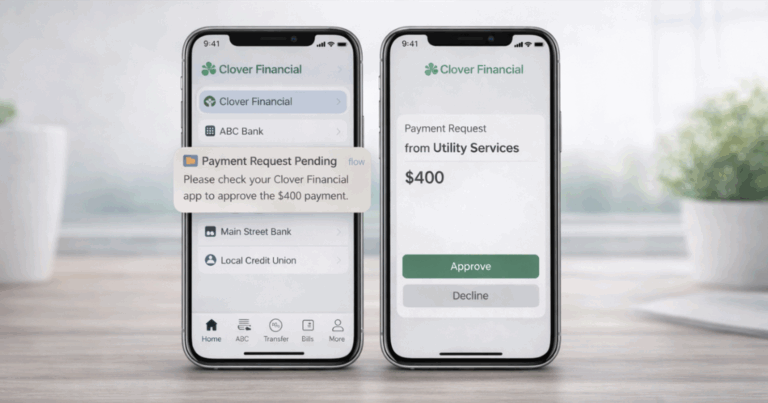
Another innovative payment channel is Pay by Text, a feature that allows customers to pre-approve payments via text message. This option is particularly beneficial for members who prefer not to enroll in full recurring payments but still want a convenient way to manage their loan repayments. Bain described Pay by Text as “a halfway house between one-time payments and signing up to do full recurring or automatic payments.”
With Pay by Text, customers receive a text message alerting them to an upcoming payment due date. They can then simply reply with a confirmation code to approve the payment, eliminating the need to visit a website or navigate multiple steps to make a payment. It enhances convenience for the user and further helps financial institutions reduce missed payments and improve overall cash flow.
One of the audience questions was about the usage of different payment channels and which ones are most commonly utilized by customers. Bain explained that while enrolled web channels generate the most payments due to recurring setups, Guest Web channels are the most frequently used on a month-to-month basis.
Alacriti’s centralized payment platform, Orbipay Payments Hub, provides innovation opportunities and the ability to make smart routing decisions at the financial institution to meet their individual needs. Financial institutions can take full ownership of their payments and control their evolution with ACH, Wire, TCH’s RTP® network, Visa Direct, and the FedNow® Service, all on one cloud-based platform.