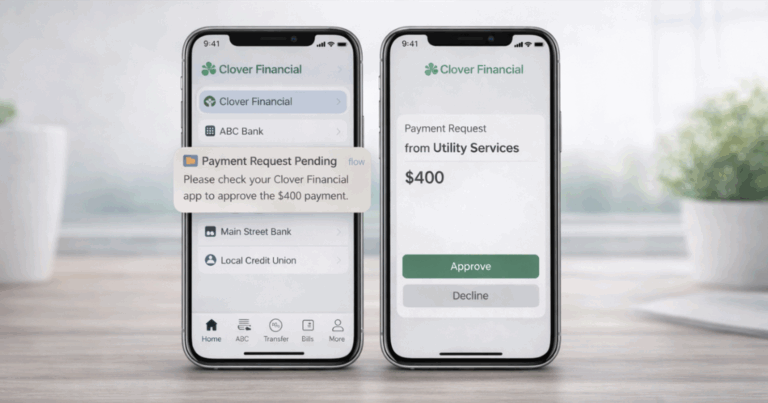
The rapid growth of instant payments and digital-first banking is pushing credit unions to rethink their strategies for staying competitive. Like many others, Royal Credit Union faced key decisions about adopting instant payments, such as whether to implement the FedNow® Service or the RTP® network, all while exploring ways to modernize loan payments.
In a CUInsight-hosted webinar, Payments Modernization: Lessons from Royal Credit Union, panelists Jeni Brantner, Vice President of Payments at Royal Credit Union, along with Stuart Bain, SVP of Product Management and Mark Majeske, SVP Faster Payments from Alacriti, were asked panel questions that revealed Royal CU’s experience with payments modernization, providing key steps, operational impacts, and strategies for credit unions to stay ahead.
Quick Links
About Royal Credit Union and Why They Modernized
Royal Credit Union has a rich history that dates back to 1964 when it was founded by employees of the Uniroyal Tire Company in Eau Claire, Wisconsin. From its modest beginnings with just 100 members, RCU has grown to serve over 300,000 members across Wisconsin and Minnesota, managing more than $5 billion in assets. According to Brantner, the credit union’s mission is to “create a positive impact in the lives we touch,” a commitment that has driven its focus on innovative and modern financial services.
The journey towards modernization for Royal CU began in earnest in 2019 when the organization took a hard look at its payments infrastructure. Brantner shared how RCU mapped out its members’ payment experiences, leading to a deeper understanding of the complexities they were facing.
Recognizing that simplifying the process was critical. The challenge was not only to enhance the member experience but also to streamline processes for their internal teams.
To address these complexities, RCU embarked on a multi-year effort to modernize its payment systems, focusing on simplifying the user experience and expanding payment options, including instant payments and loan payment modernization. Brantner emphasized that strong partnerships were key to achieving these goals, noting that they sought solutions and partners that could offer both flexibility and innovation. She explained, “We needed to find solutions and partners that would embrace our vision… to help shape that dream into reality.”
Panel Questions
1
What are the common reasons credit unions stay with the same loan payment systems despite the issues?
Many credit unions continue using the same loan payment systems despite the challenges they face. According to Bain, this reluctance to change often stems from a few common reasons. The first is the perception that making a change requires too much effort or resources, with many believing the process will be labor-intensive or costly. However, Bain pointed out this isn’t necessarily true: “The real challenge is that people are letting inertia drive their decision making…most of the work is being done by the provider to do the integration.
Another common reason is that credit unions believe their current solution is “good enough” and don’t see the need to offer something better. However, this can result in dissatisfied members, especially if the current loan payment system doesn’t provide the channels and methods members prefer. While the current solution may be adequate, it’s likely not providing the best experience. This can lead to members seeking other options when repaying loans in the future, negatively impacting retention.
There is value in offering alternate payment channels, especially for members who may not want to enroll in online banking or set up recurring payments. Guest payment options and pay-by-text services offer flexible, convenient ways for members to manage payments without committing to automatic withdrawals or sharing personal login details with third parties. These options can improve member satisfaction by meeting diverse payment preferences.
Cost is also a significant factor. Many credit unions stay with legacy systems because they are inexpensive to maintain. However, this view often overlooks hidden costs like staff time spent on manual tasks, e.g., processing payments over the phone or handling paper checks. These intangible costs add up and can detract from the perceived savings of a cheaper system. “Those numbers never include the intangible costs… All of that intangible cost is never factored into, well, it costs us ‘x’ to process a payment,” Bain explained. The cost of maintaining legacy systems in terms of resources and member satisfaction often outweighs the perceived benefits of staying the same
2
Why move ahead with instant payments now instead of waiting?
The case for adopting instant payments now, rather than waiting, is becoming increasingly compelling as the benefits and use cases grow. According to Majeske, the evolution of payment networks like the RTP® network and the FedNow® Service has shown consistent growth in both transaction volume and value. “To date on the RTP network, $35 billion has moved in terms of value, and 70 million transactions have been accomplished,” Majeske noted. As more people and businesses begin using instant payments, it quickly becomes the new normal, offering users flexibility and convenience.
One of the major reasons credit unions should consider moving ahead with instant payments now is the growing demand from members for speed and efficiency in financial transactions. As Majeske highlighted, a significant portion of transactions on instant payment networks occur outside traditional banking hours, with “50% of the volume done after or during or after bank hours.” This is one of many statistics that demonstrate the demand for 24/7 access to financial services, and credit unions that delay adopting instant payments risk being seen as outdated.
Another factor is the widespread use of instant payment features by fintech companies, which are capturing market share with innovative services. Majeske pointed out:
Credit unions have the opportunity to enter this space and offer similar services that can meet members’ evolving needs, from payroll to investment transfers. “If you’re a wait-and-see person, look at the numbers because wait-and-see is over,” Majeske said.
Brantner further supported the urgency of adopting instant payments by sharing her credit union’s experience with a gradual rollout. She explained that Royal CU began by implementing instant payment receive, allowing members to receive money instantly and eliminating the misconception that the credit union wasn’t supporting modern technology. This cautious approach allowed the credit union to familiarize itself with the tools and processes before fully rolling out additional features. “It didn’t have to be an all-or-nothing first step. So why not move forward? Why wait?” Branter asked.
The expectations of modern consumers are another reason credit unions should move forward with instant payments. Members are accustomed to instant gratification in everyday transactions—whether shopping online or making payments on platforms like Amazon or AliExpress. Loan payments should offer the same experience. “From a loan payment perspective, they’re expecting their loan payments to be processed that way… if all your current solution does is just offer effectively an electronic check, you’ve got to wait 2-3 days for it to post,” Bain pointed out.
Another factor is the growing demand for cross-border instant payments. While systems like Visa Direct currently offer cross-border capabilities, there is potential for the RTP network and FedNow Service to expand into this area. As international payments become more prevalent, financial institutions should consider the opportunities to streamline these transactions and ensure safe, instant transfers across borders.
For credit unions looking to stay competitive and meet their members’ expectations, the time to move ahead with instant payments is now. Waiting could mean missing out on the opportunity to streamline operations, improve member satisfaction, and compete with fintech innovators already capitalizing on this growing trend.
3
How do you decide which to do first, the RTP network or the FedNow Service?
Deciding whether to implement the RTP network or the FedNow Service first can be a tough choice to make, as both offer similar functionalities, offer real-time payments 24/7, and are built on the ISO 20022 standard. However, the key difference isn’t in their technical capabilities but in strategic considerations. “If you’re waiting for interoperability between the two, don’t wait… I’m not seeing any indication that there’s going to be interoperability anytime soon,” Majeske warned. Given that both networks are likely to coexist in the U.S. market without full integration, he advised that financial institutions look at both systems to meet varying market demands and member needs.
While there is no clear indication of which network will dominate specific markets, the RTP network and FedNow Service are being developed to support a range of use cases across consumer and business sectors. Large financial institutions are already creating use cases for both networks, suggesting that the best approach for credit unions may be to adopt both rather than trying to choose one over the other. Alacriti offers access to multiple payment rails.
Multiple options allow institutions to adapt to different payments scenarios, ensuring members have access to the most suitable solutions.
Brantner agreed, explaining that Royal CU found it straightforward to implement both services when they initially went live with receiving instant payments. “Adding both services caused no delay in timeframe and very minimal extra work for implementation.” This flexibility allowed Royal CU to avoid worrying about which merchants or services were using which rail, providing a seamless experience for their members. “Enabling both simply allows us to use whichever one has been adopted by whichever service they’re using,” Brantner added.
From a practical standpoint, supporting both networks not only enhances flexibility but also positions credit unions to take advantage of future developments, such as Request for Payment functionalities, which Bain believes will be transformative for high-risk loan payments and other critical use cases, such as sending payment due reminders with an embedded payment option. “Limiting yourself to just being able to send those to recipients on FedNow or RTP seems very, very limiting,” Bain explained. Offering both options ensures broader coverage and access to innovative payment tools.
4
How did the implementation of instant payments affect your day-to-day operations?
The implementation of instant payments at Royal CU has had a surprisingly minimal impact on day-to-day operations. Despite initial expectations of significant disruption, Brantner reported that the transition has been smooth, with only minor adjustments needed across various teams. “There’s been very little disruption in our day. Our accounting team keeps an eye on our activity, our electronic payments team reviews transactions that couldn’t post—just a slight handful in the past eight months—and our infrastructure team steps in to monitor our connection for issues.” This efficient setup has allowed Royal CU to adopt instant payments with minimal impact on their existing processes.
As Royal CU prepares to move into sending instant payments, Brantner anticipated additional monitoring and involvement from teams, such as fraud and electronic payments, to ensure smooth operation. “We anticipate a little more disruption in the form of having team members monitor activity beyond just our settlements,” she noted, pointing out that fraud prevention and transfer flow will become key areas of focus. However, Brantner also shared that instant payments resemble real-time services credit unions are already familiar with, so the transition should remain manageable.
Although the operational considerations—such as core integration, settlement, liquidity management, and customer service—are complex, these challenges can be minimized with the right partner. “It’s important to choose the right partner to help you through that process,” Majeske explained.
One of the most significant changes brought about by instant payments is real-time connectivity with the credit union’s core system, enabling staff to immediately see payments as they happen. This real-time visibility reduces unnecessary outreach to members who have already paid, thereby improving operational efficiency. “It removes you from having to check a third-party system… because all the payments are in one place,” Bain said. Future innovations, such as proactive notifications for upcoming payments, could further streamline processes by preventing unnecessary follow-up with members.
5
Can you share some of the lessons learned while implementing instant payments?
Implementing instant payments offers many benefits, but it also comes with lessons that financial institutions should consider to ensure a smooth transition. Royal CU’s journey went well, with the credit union being operational within three months. However, there were several key takeaways. First, Brantner stressed the importance of establishing a 24/7 support system: “Your partner is going to need to connect with someone at any time of the day if there’s a critical issue because you do not want this instant service to be down, and nobody taking notice.” This ensures any potential disruptions can be addressed immediately.
The second was the need to educate member-facing teams about the benefits of instant payments so they can confidently communicate with members. Additionally, there’s the challenge of depending on external systems and merchants for updates. For example, Branter shared a situation where it took six months for a merchant to update their system to accept instant payments. “Make sure you give yourself enough time to be preemptively ready for whatever it is you’re preparing for.”
One key lesson that Majeske learned from feedback from other Alacriti customers was the need for thorough planning— building the right project team early on and ensuring that all relevant departments, such as IT, accounting, and risk management, are involved from the start. From a technical perspective, ensuring core systems are prepared for instant payments is critical. It is also important to review policies and member agreements, which may require updates to accommodate instant payments.
Fraud detection is another significant area to address. Majeske explains that systems designed for ACH and wire fraud may not be sufficient for instant payments, which require faster detection methods. He recommended layering fraud systems to build more robust defenses and suggested using new fraud detection tools for both instant payments and existing payment types.
Bain added that one of the more complex lessons involves separating payment data from the actual transfer of funds, especially in loan payments. With instant payments, payments may post before the funds are fully received. “Some institutions find it challenging to understand the concept that with real-time payments, you’ll credit the loan before actually receiving the funds. It can be hard to accept that the loan gets credited before the money physically arrives.” This shift requires a change in mindset for institutions used to processing payments in a traditional cycle.
6
Any last-minute suggestions for people in the audience who may be thinking about considering instant payments?
For those considering implementing instant payments, there were several key suggestions from the panel to keep in mind before taking the plunge. Brantner advised financial institutions to begin by understanding their “why.
Selecting a partner who is equally invested in your long-term goals is crucial, as instant payments aren’t just about meeting current demands—they set the stage for future innovations.
Majeske emphasized that now is the perfect time to get involved in instant payments, especially given the rapid growth and adoption of real-time payment networks. “Things are growing at an extraordinary rate… and your members are being exposed to this every day.” Waiting too long could mean missing out on member expectations and market shifts. “My last message is, jump in—the water’s fine…I think things are growing enough now that it’s safe to proceed,” Majeske encouraged.
Bain recommended consideration of the intangible benefits when evaluating whether to implement instant payments. Beyond the hard costs, institutions should consider operational efficiencies and improved member satisfaction by offering modern payment options. “What cost savings could result from freeing up staff resources due to not taking endless payments over the phone? How much time can be saved by using more efficient self-service options?” Bain asked. These indirect benefits, such as freeing up staff time and boosting member satisfaction, are arguably just as important as the direct financial savings.
Payments Modernization Results
Payments modernization has delivered impressive results for Royal Credit Union, transforming both their instant payments and loan payment systems. Royal CU’s journey into real-time payments began with the launch of instant payments at the end of August 2023. Since then, the results have been substantial. “As of the end of day on June 20th of this year, we’ve had just shy of 50,000 transactions, which is over $17 million in deposits brought in, in positive liquidity for our members,” Brantner reported. This influx of liquidity demonstrates the significant impact instant payments can have, providing members with fast, reliable access to their funds.
The modernization efforts didn’t stop there. Royal CU also revamped its loan payment processes, launching this service shortly after implementing instant payments. From October 26th, 2023, through April 26th, 2024, Royal CU processed around 45,000 loan payments, amounting to an impressive $35.9 million. By streamlining loan payments, the Royal CU not only improved operational efficiency but also enhanced the member experience, offering them more flexible and convenient ways to manage their financial obligations. These figures offer a compelling case for moving forward for other credit unions considering similar modernization efforts.
Results seen within 3 months of launch:
Instant Payments
EBPP
Payments modernization involves more than just implementing new technology. It requires thoughtful planning, strong partnerships, and an understanding of operational needs and member expectations. By addressing these areas, credit unions can ensure a successful transition to modernized payments that offer both operational efficiencies and enhanced member experiences.
Alacriti’s centralized payment platform, Orbipay Payments Hub, provides innovation opportunities and the ability to make smart routing decisions at the financial institution to meet their individual needs. Financial institutions can take full ownership of their payments and control their evolution with ACH, Wire, TCH’s RTP® network, Visa Direct, and the FedNow® Service, all on one cloud-based platform.